
Campaigns
The Two-Stream Model: Why Top Programs Treat Broadcast and Lifecycle as Different Products
Most underperforming email programs have one thing in common: they're running broadcast and lifecycle as a single unified calendar. Here's the structural separation that the top quartile uses instead.

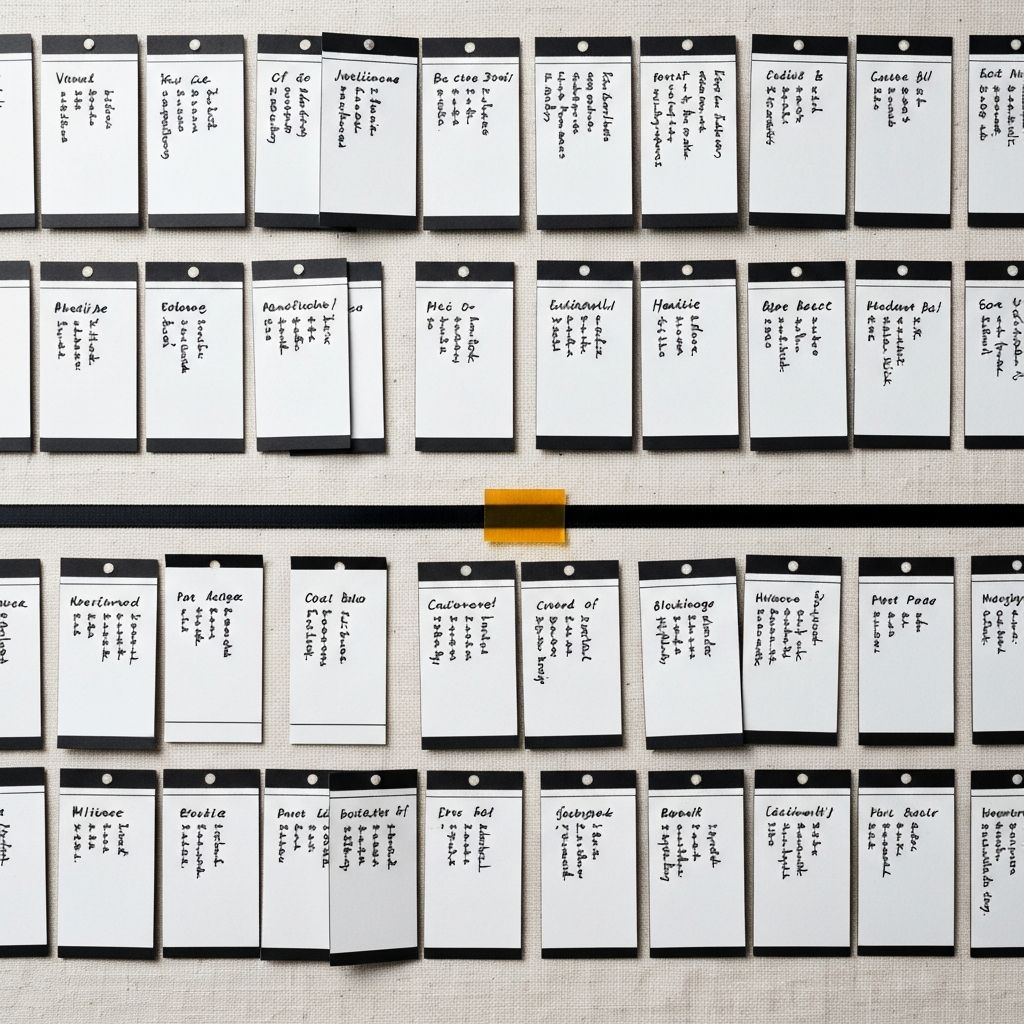
The most consistent structural difference between top-quartile and average email programs is that the top quartile runs broadcast and lifecycle as two separate streams with different owners, different calendars, and different success metrics. The two streams meet at a defined coordination layer rather than competing for the same subscriber attention budget.
If you spend enough time auditing email programs, a structural pattern starts to repeat. The programs that consistently outperform their category run broadcast and lifecycle as two separate products. The programs that consistently underperform run them as a single unified calendar.
This piece is the operating-model frame for what the top quartile does, why it works, and what changes when an underperforming program separates the two streams.
What the data shows
Across the 182 programs in our study, 84% of top-quartile programs run a clear two-stream operating model. In the bottom quartile, that number is 11%.
The teams that adopt the model after running unified for a meaningful stretch tend to see a 9 to 14% revenue lift inside one to two quarters. The lift isn't from doing anything new, it's from the programs that already exist no longer fighting each other for subscriber attention.
The constraint the model is solving for
The reason this matters is that subscriber attention is the binding constraint on every email program, and a unified calendar systematically misallocates it.
A subscriber's tolerance for messages from a brand is roughly fixed in any given week. The brand can spend that budget on broadcast, promotional campaigns, brand storytelling, calendar-driven content, or on lifecycle, welcome flows, post-purchase, replenishment, win-back. In a unified calendar, those two competing demands land in the same planning meeting, and the louder one wins.
The louder one is almost always broadcast. It has visible deadlines, retail-moment pressure, executive attention, and a campaign manager whose job is to ship it. Lifecycle has none of those forcing functions. Over enough planning cycles, lifecycle gets quietly compressed, then quietly skipped, then quietly forgotten. By month nine of a unified calendar, the lifecycle program is usually the worst-performing piece of the entire stack, not because the underlying flows are bad, but because nobody has been allowed to operate them as a real product.
The two-stream model fixes this by giving lifecycle the same structural protections as broadcast: an owner, a calendar, a success metric, and a defined relationship to the rest of the program.
What the two streams actually look like
In the operating model that holds up, the two streams have meaningfully different shapes.
Broadcast
- Cadence model: scheduled. The calendar is built four to twelve weeks ahead.
- Owner: typically a campaign manager or broadcast lead.
- Audiences: defined segments, usually broad.
- Success metric: revenue per send, with secondary metrics for engagement and unsubscribe.
- Optimization: subject line testing, send-time testing, offer mix.
- Calendar shape: dictated by the retail and brand calendar, see campaign density patterns for the canonical version.
Lifecycle
- Cadence model: triggered. Flows fire based on subscriber state, not the calendar.
- Owner: typically a lifecycle lead or CRM operator.
- Audiences: narrow, behavior-defined cohorts.
- Success metric: revenue per subscriber over a defined window, with secondary metrics for cohort progression.
- Optimization: flow structure, trigger logic, segmentation, cadence-drift audits.
- Calendar shape: continuous. Subscribers enter and exit independently.
The two have almost nothing in common. Trying to optimize them on a single calendar is like trying to run paid acquisition and product onboarding from the same Gantt chart.
The coordination layer
What separates the two-stream model from genuinely siloed programs is the explicit coordination layer between the streams. This is where most teams that try to adopt the model fall down, they separate the two streams, then leave them uncoordinated, and end up with subscribers receiving the welcome flow's day-3 email and a BFCM teaser on the same morning.
The coordination layer that works has three components:
-
A shared collision policy. Defined rules for what happens when broadcast and lifecycle want to send to the same audience in the same window. The default rule we recommend: lifecycle wins for new subscribers in their first 14 days; broadcast wins for everyone else during defined peak windows; otherwise, both run.
-
A peak handoff protocol. Four weeks before a major broadcast moment, lifecycle volume on collision-prone audiences is intentionally damped. Two weeks after, lifecycle returns to full volume and broadcast decompresses.
-
A monthly cross-stream review. One meeting per month, both leads, focused on coordination, not on individual campaigns. The agenda is collisions, audience overlap, deliverability impact across the program, and changes in the welcome flow benchmark or broadcast cadence that the other stream needs to know about.
That's it. The coordination layer isn't a meta-calendar. It's a small set of rules and one regular meeting.
What changes when a program switches
Teams that move from a unified to a two-stream model typically go through a predictable sequence over one to two quarters.
In month one, lifecycle volume goes up. Sometimes substantially. The flows that had been quietly compressed return to their designed cadence, and the lifecycle lead fills in the gaps that the unified calendar had been creating.
In month two, broadcast volume usually goes down. Once the broadcast lead can see total program send volume across both streams, the subscriber attention budget is visible for the first time, and broadcast voluntarily decompresses to make room. The reduction is typically small, 10 to 18%, and revenue per send goes up.
By month three, the cross-stream review surfaces issues that had been invisible under the unified calendar. Trigger collisions, audience definition mismatches, content overlap. These get fixed because there's now a meeting whose job is to fix them.
By month four, the program looks like the top-quartile pattern in our study, and the revenue lift starts showing up in dashboards.
Why this is also the right competitive intelligence target
There's a secondary reason to care about the two-stream model: it's one of the cleanest things you can read off a competitor's program from the outside. A brand running a healthy two-stream operating model produces a recognizable external signature, coherent broadcast cadence, dense and consistent lifecycle flows, no obvious collisions on the welcome series during peak windows. A brand running a unified calendar produces the opposite signature, and it's diagnostic.
If you're running a structured competitive intelligence program, the two-stream signature is one of the higher-value things to score on each watchlist brand. It tells you which competitors are operating their email program as a real product and which are running it as a shared inbox.
Frequently asked questions
Common questions about campaigns
Written by
Fernando Portela
Founder, Sendsitive
Founder of Sendsitive. I write about competitive email intelligence, lifecycle benchmarks, deliverability, and the operational seams that quietly erode revenue, drawing on the same research engine that powers our product.
Sendsitive Research · Produced with Sendsitive
Read next
Continue your research

Campaign Calendar Density: How Top Programs Plan Q4 Without Burning the List
What an analysis of 540 retail email programs reveals about peak-season cadence, when to ramp, where the breaking point is, and how the top quartile recovers in January.

Welcome Series Benchmark: What Top DTC Programs Send in the First 14 Days
An analysis of 312 DTC welcome programs covering the first two weeks after subscribe: cadence, structure, and the moves that distinguish the top quartile.

Cadence Drift: The Slow Decay That Kills Lifecycle Revenue
Lifecycle programs don't fail in a single week, they drift. A diagnostic for spotting cadence decay in your own program before the revenue drop shows up in dashboards.

The Complete Guide to Competitive Email Intelligence
How modern lifecycle and CRM teams build a structured monitoring program, what to track, how to analyze it, and how to turn it into roadmap decisions.
Sendsitive
Stop reverse-engineering screenshots.
Sendsitive aggregates the email and SMS programs your competitors actually ship, with frequency, calendar, and risk signals that update every day. Read the rest of the field reports while you decide whether that's something your team needs.